Ignoring water damage can cost you anywhere from $10,000 to over $100,000 in repairs, depending on how long the problem goes untreated. A slow leak caught early might cost $300 to fix. That same leak left alone for six months can destroy flooring, rot structural framing, and trigger toxic mold growth.
This article breaks down every layer of the cost of ignoring water damage, from hidden structural decay to health risks and plummeting home values. If you own a home in Burbank, CA, this information is especially relevant given the region’s aging housing stock and occasional plumbing failures tied to older pipe materials.
Understand Why Water Damage Gets Worse Over Time
Water damage is not a static problem. It follows a progression, and every day you wait, the damage category changes and the repair bill climbs. Most homeowners assume the damage stops when the visible water dries up. It does not.
Within the first 24 hours, water saturates drywall, insulation, and subfloor materials. By 48 to 72 hours, mold spores begin colonizing wet surfaces. After one to two weeks of unaddressed moisture, structural wood begins to warp and rot. At that stage, the job shifts from water mitigation to full structural reconstruction.
- 0 to 24 hours: Drywall, carpet, and insulation absorb water. Salvage is still possible with professional drying equipment.
- 24 to 72 hours: Mold growth begins. Drywall often becomes unsalvageable. Swelling starts in wood framing.
- 1 to 2 weeks: Structural wood rots, mold spreads behind walls, and air quality deteriorates.
- 1 month or more: Foundation damage, extensive mold colonies, and potential HVAC contamination become likely.
The cost of ignoring water damage multiplies at each stage. Acting within the first 24 hours is almost always the most affordable path forward.
Compare the Real Costs at Each Stage of Water Damage
Numbers matter. Here is a direct comparison of what a single water intrusion event typically costs at different response windows. These ranges reflect real repair costs for Burbank, CA homeowners in 2024 and 2025.
| Response Time | Damage Level | Estimated Repair Cost |
|---|---|---|
| Within 24 hours | Surface-level, drying only | $300 to $1,500 |
| 2 to 7 days | Drywall replacement, mold treatment | $2,000 to $8,000 |
| 1 to 4 weeks | Flooring, framing, mold remediation | $8,000 to $25,000 |
| 1 to 6 months | Structural repairs, extensive mold | $25,000 to $70,000 |
| 6 months or more | Foundation, HVAC, full reconstruction | $70,000 to $150,000+ |
These are not worst-case numbers. These are common outcomes seen by restoration professionals across Southern California. Elevate Pro-Restoration has responded to jobs in Burbank where a bathroom leak ignored for two months resulted in full subfloor replacement and mold remediation costing over $30,000.
A $150 drip pan under a water heater or a prompt call to a restoration company is always the cheaper option.
Identify the Hidden Structural Damage You Cannot See
One of the most dangerous aspects of water damage is that most of it happens inside your walls, under your floors, and above your ceiling. By the time you see a stain or smell something musty, the damage behind the surface is often already severe.
In Burbank, many homes built before 1980 still have original galvanized steel or copper pipes that can corrode and leak slowly inside wall cavities for months without any visible signs. The first indication is often a soft spot in the floor or a bubble in the drywall paint.
- Floor joists: Saturated wood joists can lose up to 50 percent of their load-bearing strength before showing any visible sagging.
- Wall studs: Rot in wall framing is almost never visible until the drywall is removed.
- Subfloor panels: OSB and plywood subflooring delaminates quickly when wet, requiring full replacement rather than drying.
- Foundation slabs: Prolonged moisture under a concrete slab can cause soil erosion and cracking, leading to costly foundation repairs.
- Insulation: Fiberglass and cellulose insulation hold moisture and act as a growth medium for mold long after visible water is gone.
Professional moisture mapping with thermal imaging cameras is the only reliable way to find hidden water damage. Elevate Pro-Restoration uses infrared technology to locate wet zones behind walls before they become catastrophic failures.
Calculate the Mold Remediation Costs Linked to Delayed Response
Mold is one of the most expensive consequences of the cost of ignoring water damage. In California, mold remediation is regulated under the Contractors State License Board (CSLB), and remediation companies must follow strict containment and disposal protocols.
The cost to remediate mold depends on the size of the affected area and whether it has spread into HVAC systems. Here is a breakdown of typical mold remediation costs in the Los Angeles County area, including Burbank.
| Mold Scope | Affected Area | Estimated Cost |
|---|---|---|
| Minor surface mold | Under 10 sq ft | $500 to $1,500 |
| Moderate containment | 10 to 100 sq ft | $1,500 to $5,000 |
| Large area remediation | 100 to 300 sq ft | $5,000 to $15,000 |
| Whole-room or HVAC spread | 300+ sq ft or ductwork | $15,000 to $30,000+ |
California law also requires post-remediation testing and clearance documentation before walls can be closed. That adds testing fees typically ranging from $300 to $700 per session.
Beyond money, mold exposure causes respiratory problems, allergic reactions, and in cases of black mold (Stachybotrys), serious neurological symptoms. Families with children, elderly members, or anyone with asthma face elevated health risks in a mold-affected home.
Recognize How Water Damage Affects Your Home’s Value in Burbank
Burbank’s real estate market is competitive, with median home prices regularly exceeding $900,000. Water damage, even when repaired, can reduce a home’s appraised value by 10 to 25 percent if disclosure records show a history of damage without proper professional remediation documentation.
California requires sellers to disclose known water damage on the Transfer Disclosure Statement (TDS). Failing to disclose is a legal liability. If you ignored water damage and sold the home without disclosing it, you could face lawsuits from the buyer years after the sale.
Even if you are not planning to sell, an ignored leak that turns into a mold problem can affect your homeowner’s insurance. Many insurers in California deny claims for damage that was clearly progressive and not reported promptly. That means the financial burden falls entirely on you.
- Documented professional remediation protects your home’s resale value.
- Unremediated damage requires disclosure and typically triggers price reductions.
- Insurance coverage for water damage is often time-sensitive. Delayed reporting can void your claim.
- Buyers in Burbank frequently hire inspectors who use moisture meters, meaning hidden damage is often discovered before closing.
Protecting your investment means acting fast. The cost of ignoring water damage is not just a repair bill. It is also a hit to your property’s long-term value.
Explore What Professional Water Damage Restoration Actually Includes
Many homeowners avoid calling a restoration company because they assume the process is overwhelming or expensive. In reality, professional water damage mitigation done quickly is almost always cheaper than the alternative of waiting and dealing with the compounded damage.
Elevate Pro-Restoration serves Burbank and the surrounding areas with a structured restoration process that is designed to stop damage progression as fast as possible. Here is what professional restoration typically includes at each phase.
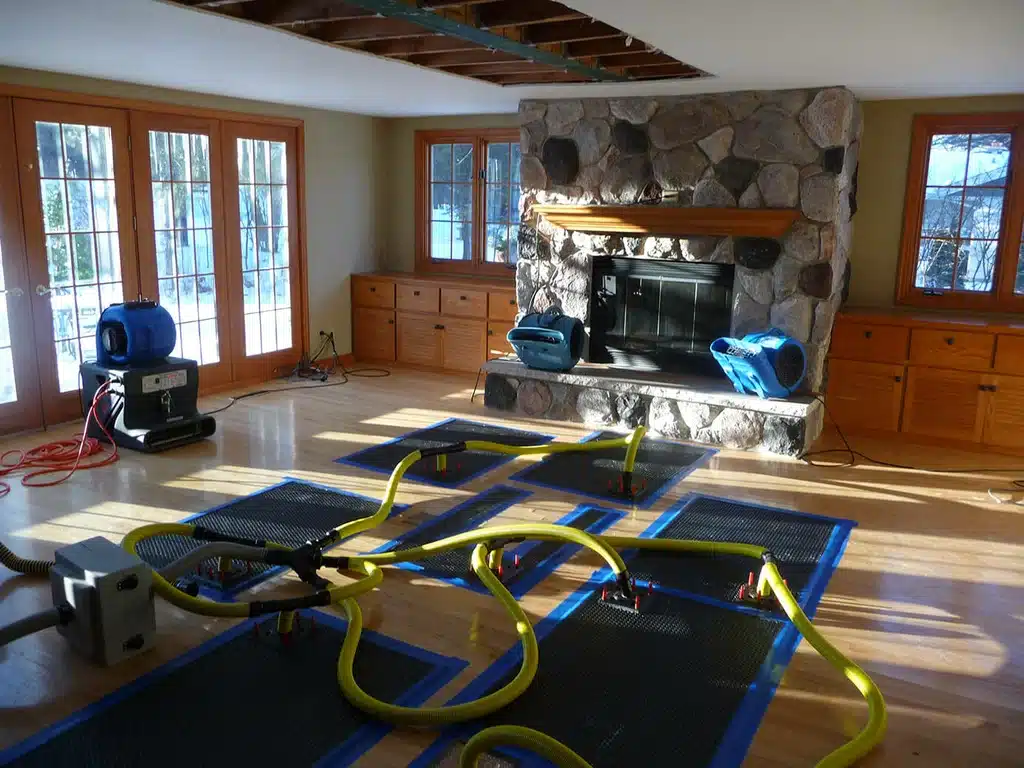
- Emergency extraction: Industrial pumps and wet vacuums remove standing water within the first hours. This step alone prevents the bulk of structural saturation.
- Moisture mapping: Thermal imaging and moisture meters identify all affected materials, including hidden wet zones.
- Structural drying: High-capacity air movers and dehumidifiers run for 3 to 5 days, monitored daily to track drying progress.
- Mold prevention treatment: Antimicrobial agents are applied to surfaces at risk for mold growth before walls are closed.
- Documentation: All readings, equipment logs, and photos are documented for your insurance claim and for your records.
- Reconstruction: Damaged drywall, flooring, and insulation are replaced and finished to match existing materials.
The full process for a contained water loss in a single room typically takes 7 to 14 days. Larger losses involving multiple rooms or structural damage take longer, but the mitigation phase that stops further damage is always the priority.
FAQs on the Cost of Ignoring Water Damage
How long can you leave water damage before it becomes a serious problem?
Mold can begin growing within 24 to 48 hours of water exposure. Structural wood starts softening after about a week of sustained moisture contact. The sooner you act, the more you can save. Waiting even a few days can double or triple your repair costs.
Does homeowner’s insurance cover water damage if I waited to report it?
Most standard homeowner’s insurance policies in California cover sudden and accidental water damage, but they exclude damage that resulted from neglect or a gradual leak that was not reported promptly. If you delayed reporting, your insurer may deny part or all of your claim. Always report water damage as soon as you discover it.
Can I dry out water damage myself without calling a professional?
Consumer fans and dehumidifiers are not powerful enough to dry wall cavities, subfloors, or insulation properly. DIY drying almost always leaves residual moisture inside structures, which leads to mold growth within weeks. Professional drying equipment moves significantly more air and pulls far more moisture per hour than anything available at a hardware store.
What are the signs of water damage I might be missing in my Burbank home?
Common signs include paint bubbling or peeling, soft spots in flooring, a musty smell in closets or under sinks, staining on ceilings, and higher-than-normal water bills. Burbank homes built before 1970 should also be inspected periodically for galvanized pipe corrosion, which often leaks inside wall cavities before any visible sign appears.
How much does it cost to fix water damage if I call right away?
A contained water loss caught within 24 hours typically costs between $300 and $2,500 for professional mitigation, depending on the size of the affected area. That price rises sharply with every day of delay. Early intervention is by far the most cost-effective decision a homeowner can make.
Is water damage in Burbank covered by FEMA or local assistance programs?
FEMA assistance is only available during federally declared disasters. Most residential water damage from plumbing failures or roof leaks is not eligible for FEMA support. Some local programs through Los Angeles County may offer limited assistance to low-income homeowners. For most Burbank residents, homeowner’s insurance is the primary financial resource for water damage recovery.
Wrap Up and Next Steps
The cost of ignoring water damage is one of the most preventable financial disasters a homeowner can face. A small leak left alone can become a six-figure structural repair, a mold health crisis, and a permanent reduction in your home’s value.
Acting fast is always the right move, and the right call in Burbank is to Elevate Pro-Restoration. Our team responds quickly, documents everything for your insurance claim, and uses professional-grade equipment to stop damage in its tracks.
Call Elevate Pro-Restoration today at (213) 263-4570 to schedule an inspection or request an emergency response. Do not let a manageable problem become a catastrophic one.