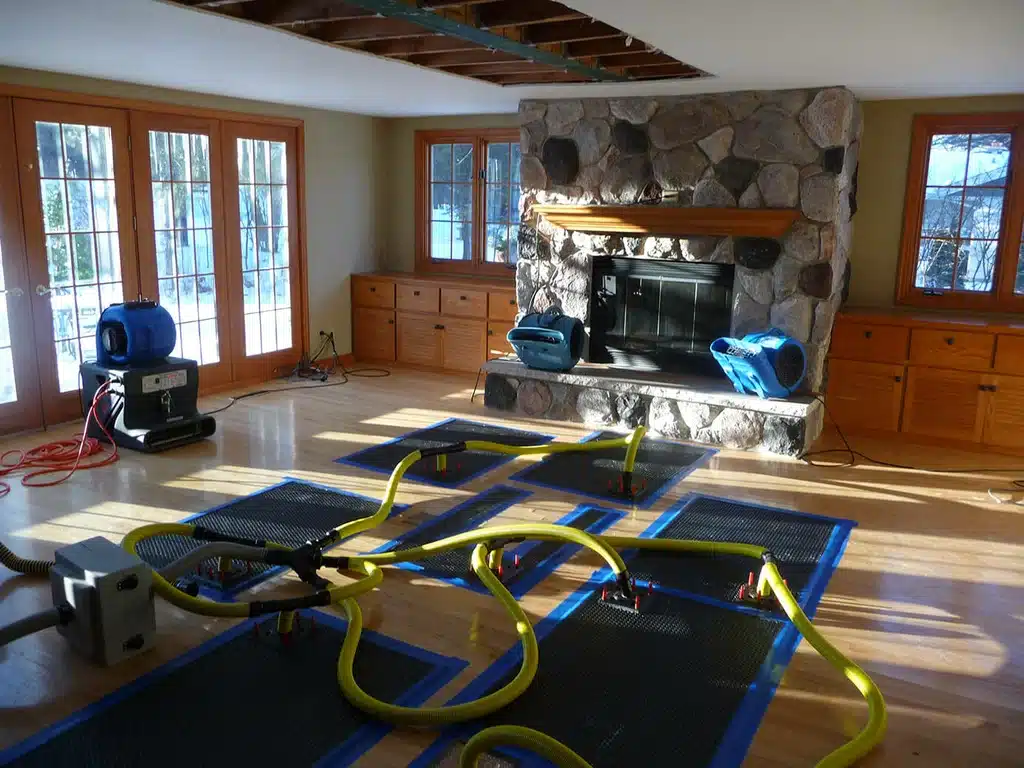
Water damage restoration takes anywhere from 3 to 7 days for most residential jobs, but complex cases involving structural damage or mold can take 2 to 4 weeks or longer. The timeline depends on the extent of saturation, the materials involved, and how quickly the process begins. This article breaks down each phase of restoration, what affects the schedule, and what Burbank, CA homeowners should expect at every step.
Understand the Typical Water Damage Restoration Timeline
Most restoration jobs move through the same general phases regardless of the source of the water. Knowing what each phase involves helps you plan around the work and ask the right questions.
Here is a general breakdown of how long each phase takes:
| Phase | What Happens | Estimated Duration |
|---|---|---|
| Emergency Response | Water extraction, safety assessment | 2-8 hours |
| Water Extraction | Industrial pumps remove standing water | 1-2 days |
| Structural Drying | Air movers and dehumidifiers dry materials | 3-5 days |
| Mold Prevention Treatment | Antimicrobial application to affected areas | 1 day |
| Restoration and Repairs | Replace drywall, flooring, insulation | 1-2 weeks |
These phases often overlap. Drying equipment may run while antimicrobial treatments are applied. Your total timeline depends on how smoothly each phase progresses and whether any surprises turn up behind walls or under subfloors.
See How Water Damage Category Affects Drying Time
Not all water damage is equal. The IICRC, which sets the industry standard for restoration, classifies water damage into three categories. The category of your water determines both the safety protocols required and how long the job takes.
- Category 1 (Clean Water): Comes from a broken supply line or overflow from a clean source. Drying typically takes 3 to 5 days. This is the fastest scenario.
- Category 2 (Gray Water): Comes from washing machines, dishwashers, or toilet overflow without solids. Drying takes 5 to 7 days and requires more thorough sanitation.
- Category 3 (Black Water): Sewage backups, flooding from rivers, or standing water that has been sitting long enough to grow bacteria. Restoration can take 2 to 4 weeks or more.
Category 3 situations require full personal protective equipment, removal of contaminated materials, and thorough disinfection before drying equipment is even useful. If your Burbank home flooded from a sewer backup, expect a longer and more involved process.
Learn How Moisture Class Determines Drying Equipment Needs
Beyond the category of water, restoration professionals also assign a moisture class based on how deeply materials are saturated. This directly affects how many air movers and dehumidifiers go into your home and how long they run.
| Moisture Class | Description | Typical Drying Time |
|---|---|---|
| Class 1 | Minimal absorption, small affected area | 1-3 days |
| Class 2 | Entire room affected, carpet and pad wet | 3-5 days |
| Class 3 | Walls, ceilings, and insulation saturated | 5-7 days |
| Class 4 | Dense materials like hardwood or concrete saturated | 7-14+ days |
Class 4 materials like hardwood floors and concrete slabs hold moisture much longer than carpet or drywall. In some cases, hardwood floors may need to be removed even if they look intact on the surface because moisture trapped underneath will cause warping and mold growth.
Recognize the Factors That Slow Down Restoration in Burbank
Several conditions specific to Burbank, CA and the broader Los Angeles area can add time to a restoration project. Being aware of these factors helps you set realistic expectations and make faster decisions.
- Older construction: Many Burbank homes were built in the 1950s through 1970s and may contain plaster walls, original hardwood subfloors, or older insulation. These materials absorb more moisture and take longer to dry.
- Asbestos and lead paint: Homes built before 1980 may trigger additional testing requirements before work can proceed. California regulations require proper handling and disposal of these materials.
- Permit requirements: Structural repairs in Burbank require permits through the Burbank Building Division. Waiting on inspections can add days to your timeline.
- Insurance adjuster scheduling: Your insurer may require a field inspection before approving repair work. This step alone can delay the project by several days.
- Hidden moisture: Burbank homes with stucco exteriors or tile floors can trap moisture in places that aren’t immediately visible. Moisture mapping with thermal imaging often reveals damage that extends the job scope.
At Elevate Pro-Restoration, we use thermal imaging cameras during every initial assessment so we can identify hidden moisture pockets before they become a bigger problem. This upfront step actually saves time later in the project.
Explore What Happens If You Wait Too Long to Start Restoration
Every hour of delay adds risk and cost. Mold can begin growing within 24 to 48 hours of water exposure under the right conditions. In a warm climate like Burbank, where summer temperatures regularly hit the 90s and indoor humidity rises during wet events, that window can be even shorter.
Waiting 48 hours or more before beginning extraction dramatically increases the chance that you will need mold remediation on top of standard water damage restoration. That adds both time and cost to the project.
Here is how delay affects your timeline:
- 0-24 hours: Standard restoration timeline applies. Drying typically takes 3 to 5 days.
- 24-48 hours: Risk of mold growth increases. Antimicrobial treatment becomes essential. Add 1 to 2 days.
- 48-72 hours: Mold is likely present. Professional mold testing and remediation required before restoration can resume. Add 3 to 7 days.
- More than 72 hours: Structural materials may be compromised. Full mold remediation, structural drying, and possible demolition of affected walls or floors will be needed. Timeline can double.
Calling a restoration company the moment you discover water damage is the single most effective way to keep the project on the shorter end of the timeline. Elevate Pro-Restoration offers 24/7 emergency response in Burbank and surrounding communities so you never have to wait until morning to get the process started.
Understand the Restoration Phase After Drying Is Complete
Once moisture readings confirm that your home has reached the target dryness level, the restoration phase begins. This is where the work shifts from mitigation to rebuilding. Timelines here vary widely depending on what was removed or damaged.
Typical repair work in this phase includes replacing drywall and insulation, repainting walls and ceilings, installing new flooring, replacing cabinetry or trim, and repairing structural framing if needed.
A straightforward repair job involving one bathroom and a hallway might take 3 to 5 business days. A larger job involving multiple rooms, hardwood floors, and kitchen cabinets could take 2 to 3 weeks.
If your home requires a building permit in Burbank, your contractor must schedule inspections at specific stages, like rough framing and final inspection. Each inspection adds time but ensures the work meets California building code requirements.
The Elevate Pro-Restoration team handles both the mitigation and the rebuild, which means you are working with one point of contact rather than coordinating between two separate contractors. That alone can shave several days off the overall project.
FAQs on How Long Does Water Damage Restoration Take
How long does it take for walls to dry after water damage?
Drywall typically takes 3 to 5 days to dry with professional equipment. Plaster walls, which are common in older Burbank homes, can take 7 to 14 days or longer. If moisture readings remain high after a week, the drywall may need to be removed and replaced rather than dried in place.
Can I stay in my home during water damage restoration?
In most cases, yes, as long as the affected area is contained and the water was clean. If the damage involves sewage, mold, or multiple rooms, temporary relocation may be necessary. Your restoration company should advise you on safety after the initial assessment.
How long do water damage restoration companies run drying equipment?
Drying equipment typically runs 24 hours a day for 3 to 5 days. Technicians take moisture readings daily and adjust the number and placement of air movers and dehumidifiers based on progress. The equipment does not come out until readings meet the IICRC drying standard for the specific material type.
Does water damage restoration take longer if there is mold?
Yes. Mold remediation must be completed before standard restoration work can resume. Depending on the extent of the mold, this can add 3 to 10 days to your total project timeline. Post-remediation testing is also required in California before clearance is given.
How long does it take for a water damage insurance claim to be approved?
Insurance timelines vary by carrier and policy. In California, insurers are required to acknowledge a claim within 15 days and accept or deny it within 40 days. Emergency mitigation work can often begin before full claim approval, but confirm this with your adjuster and your restoration company before proceeding.
What is the fastest way to speed up water damage drying time?
The fastest way is to call a professional immediately and allow them to set up industrial drying equipment right away. Removing wet materials like soaked carpet and padding also speeds up drying significantly. Opening windows may help in dry conditions, but in humid weather it can actually slow the process down.
Wrap Up and Next Steps
Most water damage restoration projects in Burbank take 3 to 7 days for drying, followed by 1 to 2 weeks of repairs, depending on the extent of the damage. Acting fast, within the first 24 hours, is the most reliable way to keep your timeline and costs on the lower end.
If you are dealing with water damage right now, contact Elevate Pro-Restoration for a same-day response in Burbank, CA. Call us at (213) 263-4570 to speak with a restoration specialist, get an assessment scheduled, and start the drying process before the damage has a chance to spread.