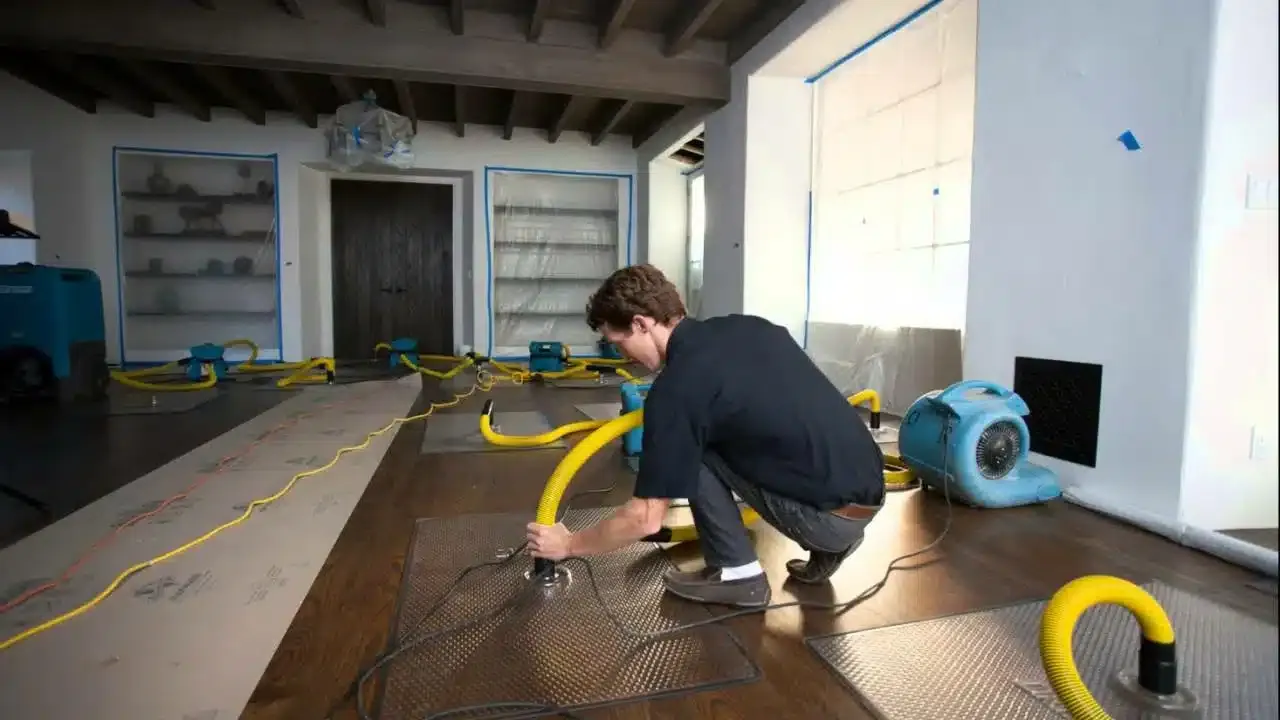
The most common signs of water damage in a home include stained ceilings, warped floors, peeling paint, musty odors, and visible mold growth. These warning signs can appear within 24 to 48 hours of water exposure and often get worse quickly if left unaddressed.
In Burbank, CA, older homes and multi-unit properties face unique moisture risks from aging plumbing, seasonal rains, and poor ventilation. This article walks you through every major sign of water damage, what causes it, and what to do next.
Spot Water Stains and Discoloration on Ceilings and Walls
Yellow, brown, or rust-colored stains on your ceiling or walls are one of the clearest signs of water damage in a home. These stains form when water soaks through drywall and leaves mineral deposits behind as it dries.
Do not ignore a stain just because the area feels dry now. A dry stain means the leak stopped or slowed, but the source is still there. Stains almost always return and grow larger over time.
- Ring-shaped brown stains on ceilings usually point to a slow roof or plumbing leak above.
- Streaks running down walls often indicate a pipe leak inside the wall cavity.
- Bubbling or blistering paint next to a stain means moisture is actively trapped beneath the surface.
- Yellow or orange discoloration near windows can signal failed window sealing or flashing.
- Dark gray patches at the base of walls often point to foundation seepage or slab moisture.
If you see staining on more than one wall or in multiple rooms, the problem is likely widespread. Call a professional before painting over the stains, as that only masks the damage.
Detect Musty Odors and Mold Growth Throughout Your Home
A persistent musty or earthy smell is one of the earliest signs of water damage in a home, often appearing before any visible damage shows up. That odor comes from mold and mildew colonies that grow in hidden damp areas like wall cavities, under subfloors, and inside HVAC ducts.
Mold can begin growing within 24 to 48 hours of a water intrusion event. In Burbank, warm indoor temperatures make mold growth even faster during summer months when air conditioning creates condensation in walls and ducts.
- Check inside closets, cabinets under sinks, and bathroom corners for fuzzy black, green, or white growth.
- Pull back rugs near exterior walls or bathroom areas to check for mold on subfloor surfaces.
- Inspect window sills and door frames where condensation collects regularly.
- Look behind appliances like washing machines, dishwashers, and refrigerators with water lines.
Mold remediation in Burbank can cost between $500 and $6,000 depending on how far it has spread. Catching mold early dramatically reduces that cost. The team at Elevate Pro-Restoration can test for hidden mold and identify the moisture source driving its growth.
Identify Warped, Buckled, or Soft Flooring
Your floors are one of the first places to show physical signs of water damage. Wood floors absorb moisture and swell, causing boards to warp, cup, or buckle. Tile grout cracks when the subfloor beneath it shifts from water saturation.
Soft or spongy spots under carpet or laminate flooring usually mean the subfloor has been wet long enough to weaken structurally. Walking over a soft spot repeatedly can cause it to collapse inward, creating a safety hazard.
| Floor Type | Common Water Damage Signs | Typical Repair Cost (Burbank) |
|---|---|---|
| Hardwood | Cupping, buckling, dark staining | $800 to $2,500 per room |
| Laminate | Swelling edges, bubbling surface | $500 to $1,800 per room |
| Tile | Cracked grout, loose tiles | $300 to $1,200 per room |
| Carpet | Soft subfloor, odor, discoloration | $600 to $2,000 per room |
| Vinyl/LVP | Lifting edges, bubbles under surface | $400 to $1,500 per room |
If your flooring feels soft or uneven, do not wait to investigate. The longer moisture sits under a floor, the more expensive the repair becomes.
Check for High Water Bills and Running Meter Readings
A sudden spike in your water bill without any change in usage is a strong indicator of a hidden leak. Even a small pinhole leak in a supply line can waste 250 to 300 gallons of water per day inside your walls.
Here is a simple way to check for a hidden leak at home. Turn off all water fixtures and appliances. Locate your water meter outside and watch the dial for 15 to 30 minutes. If the dial moves at all, water is escaping somewhere in your system.
Burbank Water and Power customers can request leak detection assistance or review usage data through the utility portal. Unexplained usage spikes are often the first clue to a slow leak that has not yet caused visible damage.
- A bill that jumps by 20 percent or more with no explanation warrants an immediate inspection.
- Toilet flappers and supply valves are common sources of silent leaks that drive up bills.
- Irrigation system leaks underground can saturate soil near your foundation and cause moisture intrusion.
Compare Common Water Damage Sources by Risk Level
Not all water damage comes from dramatic floods or burst pipes. Many of the most destructive leaks are slow and silent. Understanding where damage typically starts helps you prioritize your inspections.
| Damage Source | Risk Level | Speed of Damage | Average Detection Time |
|---|---|---|---|
| Burst pipe | Very High | Immediate | Minutes to hours |
| Roof leak | High | Slow to moderate | Days to weeks |
| Slab leak | High | Slow | Weeks to months |
| Appliance leak | Medium to High | Slow | Days to weeks |
| Window or door sealing failure | Medium | Very slow | Months to years |
| Condensation buildup | Low to Medium | Very slow | Months to years |
In Burbank, slab leaks are particularly common in homes built before 1980. Older copper and galvanized steel pipes corrode over time and develop leaks beneath the concrete slab, causing warm spots on tile floors and unexplained water bill increases.
Elevate Pro-Restoration regularly responds to slab leak damage and post-leak mold situations across Burbank. Early detection is always the key to keeping repair costs manageable.
Notice Structural Changes Like Sagging Ceilings and Swollen Walls
When water saturates drywall or ceiling materials over time, the structure begins to physically deform. A sagging or bowed ceiling is a serious sign that water has pooled above the surface and the material is near its breaking point.
Do not press on a bulging ceiling to test it. The pooled water above can release suddenly and cause significant damage to your floors and belongings below. This is a situation that needs professional attention immediately.
- Walls that bow outward or feel soft when pressed are saturated with moisture.
- Door frames and window frames that shift out of square can indicate wall studs are swelling from moisture exposure.
- Doors and windows that suddenly stick or fail to close properly are a common early sign of structural moisture damage.
- Cracks along drywall seams and around door frames that widen over weeks may indicate ongoing moisture movement in the framing.
Structural water damage in Burbank homes can cost $3,000 to $15,000 or more to repair depending on how much framing, drywall, and insulation must be replaced. Catching the problem at the staining or odor stage costs far less.
FAQs on Signs of Water Damage in Home
How do I know if water damage is old or new?
Old water stains are typically dry and have a defined ring or edge. New damage often feels damp to the touch and the stain edges look soft or blurry. If you see both dry rings and a fresh wet center, the leak is ongoing and active.
Can water damage occur without a visible leak?
Yes, condensation inside walls, rising moisture from a concrete slab, and slow seepage through foundation cracks can all cause water damage without a visible drip or puddle. These hidden sources are actually among the most common signs of water damage in a home in Burbank.
Is water damage covered by homeowners insurance in California?
Most homeowners insurance policies in California cover sudden and accidental water damage, like a burst pipe or appliance failure. Slow leaks and maintenance-related damage are typically excluded. Document everything with photos and call your insurer before beginning any cleanup.
How quickly does mold grow after water damage?
Mold can begin growing within 24 to 48 hours of a water event if moisture, warmth, and organic material are present. Burbank’s warm climate year-round accelerates mold growth, so drying out a water-damaged area within the first 48 hours is critical.
What should I do first if I find water damage?
Stop the water source if you can, then document the damage with photos and video. Avoid using electrical outlets or appliances near the affected area. Contact a licensed restoration company like Elevate Pro-Restoration right away to begin professional drying before mold sets in.
How much does water damage restoration cost in Burbank, CA?
Water damage restoration in Burbank typically costs between $1,500 and $10,000 depending on the size of the affected area, the category of water involved, and how long the damage went undetected. Getting a professional assessment early is the best way to control total costs.
Wrap Up and Next Steps
The signs of water damage in a home range from subtle odors and slight floor warping to visible stains and sagging ceilings. Catching any one of these warning signs early and acting quickly is the difference between a manageable repair and a major structural project.
If you are seeing any of these warning signs in your Burbank home, do not wait for the problem to get worse. Elevate Pro-Restoration is a locally based restoration company serving Burbank, CA with fast response times and professional water damage assessments.
Call us today at (213) 263-4570 to schedule an inspection or request a quote. Our team is ready to help you identify the source, stop the damage, and restore your home the right way.