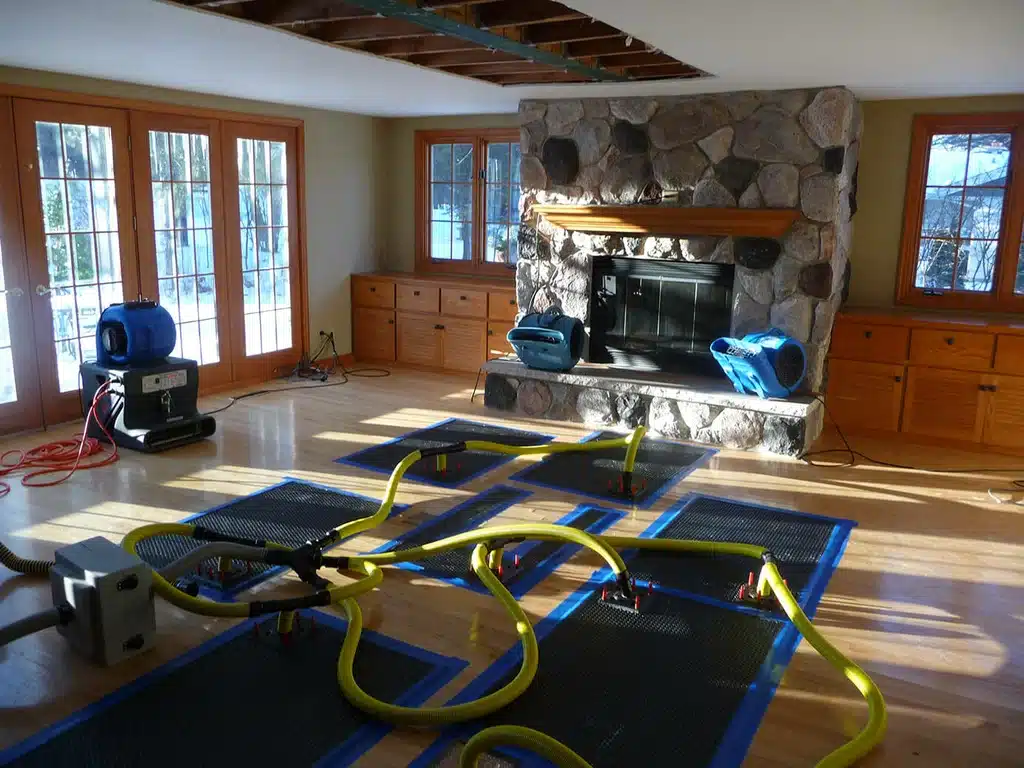
Los Angeles receives most of its annual rainfall, roughly 14 to 15 inches, between November and March, and a single atmospheric river event can drop 2 to 4 inches in just a few hours. That intensity overwhelms drainage systems, saturates dry soil, and forces water into homes that were built assuming mostly dry conditions.
For homeowners in Burbank and across the greater LA area, that means real risks: flooded crawl spaces, roof leaks, foundation cracks, and mold growth that starts within 24 to 48 hours of water intrusion.
This guide covers the most actionable rainy season water damage tips for Los Angeles homeowners, from preventive steps you can take today to what to do immediately after a storm causes damage.
Understand Why Los Angeles Homes Are Especially Vulnerable to Rainy Season Damage
Many LA-area homes were designed primarily for a dry climate. Roofs often have low slopes, landscaping is rarely graded for heavy runoff, and crawl spaces are common, especially in older Burbank neighborhoods built between the 1940s and 1960s.
When a major storm arrives after a long dry stretch, the hard, hydrophobic soil repels water rather than absorbing it. This is called the “dry soil effect,” and it turns even a moderate rainstorm into a runoff event that pools against foundations and enters basements or crawl spaces fast.
Burbank, CA also sits near the Verdugo Mountains, which means hillside runoff is a real factor. Homes at the base of slopes or in low-lying areas near Tujunga Wash face heightened flood risk during heavy rain events.
Understanding these local conditions is the first step in taking rainy season water damage tips for Los Angeles seriously, rather than treating them as generic advice you can skip.
Prepare Your Roof and Gutters Before the First Storm Hits
Your roof and gutters are the first line of defense against storm water. A clogged gutter can force water behind your fascia boards and into your attic or walls in under an hour of heavy rain. Here is what to do before November arrives.
- Clean gutters and downspouts: Remove leaves, debris, and any bird nests. Flush downspouts with a hose to confirm water flows freely.
- Extend downspouts: Discharge should land at least 4 to 6 feet from your foundation. Use plastic extenders if your current setup dumps water right next to the house.
- Inspect roof flashing: Look around chimneys, skylights, and vents for cracked or lifted flashing. This is a top entry point for leaks.
- Check shingles for damage: Missing, curled, or cracked shingles should be replaced before storm season. A roofing contractor will charge $200 to $600 for minor repairs in the Burbank area.
- Trim overhanging branches: Branches that hang over your roof can scrape shingles and deposit debris into gutters during windstorms.
- Install gutter guards: Mesh or micro-mesh gutter guards reduce debris buildup and can save you from annual cleaning costs of $150 to $300.
Spending $300 to $800 on pre-season roof and gutter maintenance can prevent water damage repairs that routinely cost $3,000 to $15,000 or more.
Protect Your Foundation and Yard Against Water Intrusion
Water pooling against your foundation is one of the most common causes of structural water damage in Los Angeles homes. The fix often starts with the grade of your yard, which should slope away from the house at a rate of 6 inches per 10 horizontal feet according to standard building guidelines.
Here are the key steps to protect your foundation before rainy season:
- Re-grade low spots: Fill in any areas where water visibly collects near the foundation after regular watering or light rain.
- Install a French drain: A perforated pipe buried in gravel redirects groundwater away from the foundation. Costs in the Burbank area typically run $25 to $60 per linear foot installed.
- Check window wells: Basement or below-grade window wells should have gravel at the bottom and a cover to prevent water from pooling and seeping in.
- Seal foundation cracks: Any crack wider than 1/8 inch should be filled with hydraulic cement or polyurethane caulk before the first storm.
- Inspect crawl space vents: Make sure vents are clear and that your vapor barrier (6-mil polyethylene sheeting is standard) is intact and covering the entire crawl space floor.
If you notice white mineral deposits (efflorescence) on your foundation walls, that is a sign water has already been moving through the concrete. Address it before the next rainy season makes it worse.
Compare Common Water Damage Entry Points and Repair Costs
Knowing where water is most likely to enter your home helps you prioritize your prep budget. The table below breaks down the most common entry points for Los Angeles and Burbank homes, estimated repair costs, and the urgency level for each.
| Entry Point | Common Cause | Average Repair Cost | Urgency Level |
|---|---|---|---|
| Roof and flashing | Missing shingles, cracked flashing | $200 to $2,500 | High |
| Foundation cracks | Hydrostatic pressure, soil movement | $500 to $5,000 | High |
| Clogged gutters | Debris buildup, no maintenance | $150 to $600 | Medium |
| Window and door seals | Failed caulk or weatherstripping | $50 to $400 | Medium |
| Crawl space vents | Damaged vapor barrier, open vents | $300 to $2,000 | Medium |
| Sump pump failure | Power outage, mechanical failure | $400 to $1,200 to replace | High |
| Improper yard grading | Water pooling near foundation | $1,000 to $5,000 | Low to Medium |
Repair costs above reflect typical pricing in the Burbank and greater Los Angeles area as of 2025. Prices vary based on home size, accessibility, and material costs.
Know What to Do Immediately After Storm Water Damage Occurs
Fast action in the first 24 to 48 hours dramatically reduces the total damage and cost of recovery. Mold begins colonizing wet materials within 24 hours, so speed matters. Here is exactly what to do if water enters your home during a storm.
- Stop the source if possible: If it is safe to do so, identify where water is entering and use towels, sandbags, or temporary sealants to slow the intrusion.
- Document everything: Take photos and video of all water damage before moving or removing anything. Your homeowner’s insurance claim depends on thorough documentation.
- Remove standing water: Use a wet/dry vacuum or submersible pump to extract pooled water. The longer it sits, the deeper it wicks into flooring and walls.
- Pull up wet rugs and flooring: Carpet and padding that are saturated rarely dry fully without professional equipment, and they become a mold source quickly.
- Open windows and run fans: Increase airflow immediately to start drying the space, but only if outdoor humidity is lower than indoor humidity.
- Call a licensed restoration company: Professional water extraction and drying equipment, including industrial dehumidifiers and air movers, removes moisture that fans cannot reach.
- Contact your insurance company: File your claim within 24 to 72 hours. Most policies require prompt reporting for storm and flood damage claims.
Elevate Pro-Restoration responds to water damage emergencies in Burbank and surrounding LA communities. Early professional intervention is the single biggest factor in keeping restoration costs manageable.
Review Your Homeowner’s Insurance Coverage Before Rainy Season
A common and painful surprise for Los Angeles homeowners is discovering after a storm that their standard homeowner’s insurance policy does not cover flood damage. Standard HO-3 policies typically cover sudden and accidental water damage, such as a burst pipe, but exclude flood damage caused by storm runoff or rising groundwater.
| Type of Water Damage | Covered by Standard HO-3? | Covered by NFIP Flood Policy? | Notes |
|---|---|---|---|
| Roof leak from storm | Usually yes | No | Must prove sudden damage |
| Storm runoff flooding | No | Yes | 30-day waiting period for NFIP |
| Sewer backup | No (rider needed) | No | Add sewer backup endorsement |
| Burst pipe (cold weather) | Usually yes | No | Negligence exclusions may apply |
| Groundwater seepage | No | Yes (building coverage only) | Contents covered separately |
If you live in a FEMA-designated flood zone in the Burbank or LA area, lenders typically require a separate National Flood Insurance Program (NFIP) policy. Check FEMA’s Flood Map Service Center online to see your property’s flood zone designation.
Even outside designated flood zones, adding a sewer backup rider ($40 to $100 per year) is worth considering for any LA home with older plumbing or a low-lying location.
FAQs on Rainy Season Water Damage Tips for Los Angeles
How much does water damage restoration cost in Los Angeles?
Water damage restoration in Los Angeles typically costs between $1,500 and $15,000 depending on the size of the affected area, the category of water (clean, gray, or black), and how long the moisture sat before treatment began. Minor roof leaks caught early may run $1,500 to $3,000, while flooded crawl spaces or large basement events can exceed $10,000.
Does homeowner’s insurance cover rainy season flood damage in California?
Standard homeowner’s insurance in California does not cover flood damage from storm runoff or rising groundwater. You need a separate NFIP or private flood insurance policy for that coverage. Storm-related roof leaks and sudden pipe bursts are generally covered under a standard HO-3 policy.
How quickly does mold grow after water damage in Los Angeles?
Mold can begin growing on wet drywall, wood, and carpet within 24 to 48 hours in the warm, humid post-storm conditions typical of Southern California. Los Angeles indoor temperatures rarely drop low enough to slow mold growth significantly. This is why water extraction and drying must begin within the first day whenever possible.
What are the signs of hidden water damage in walls or floors?
Discoloration, bubbling paint, soft or warped flooring, and a musty smell are the most common indicators of hidden water damage. In Burbank homes with stucco exteriors, look for dark streaking or staining on the exterior walls after rain, which can signal moisture trapped behind the surface. A moisture meter is the most reliable tool for confirming hidden moisture without tearing into walls.
Is Burbank at risk for flooding during heavy rain?
Yes. Parts of Burbank are in or near FEMA-designated Special Flood Hazard Areas, particularly neighborhoods near the Los Angeles River channel and Tujunga Wash. The hillside areas near the Verdugo Mountains also experience significant runoff during storm events. Check your property on FEMA’s Flood Map Service Center and consult with your insurance agent about your specific risk level.
When should I call a professional restoration company instead of DIY cleanup?
Call a licensed restoration company any time water has affected more than 10 square feet of flooring or walls, if standing water exceeds half an inch, if the water is gray or black (sewage-contaminated), or if moisture has been present for more than 24 hours. Elevate Pro-Restoration in Burbank uses professional-grade drying equipment that standard fans and dehumidifiers cannot replicate.
Wrap Up and Next Steps
The most important rainy season water damage tips for Los Angeles homeowners come down to three things: prepare your home before storms arrive, act fast when water enters, and know who to call for professional help.
Proactive maintenance, the right insurance coverage, and a trusted restoration partner make the difference between a manageable cleanup and a months-long repair project that costs tens of thousands of dollars.
If you have water damage now, or you want a professional assessment before rainy season starts, contact Elevate Pro-Restoration in Burbank, CA. Call us at (213) 263-4570 to schedule an inspection or request an emergency response. We are ready to help you protect your home and recover fast when storms hit.